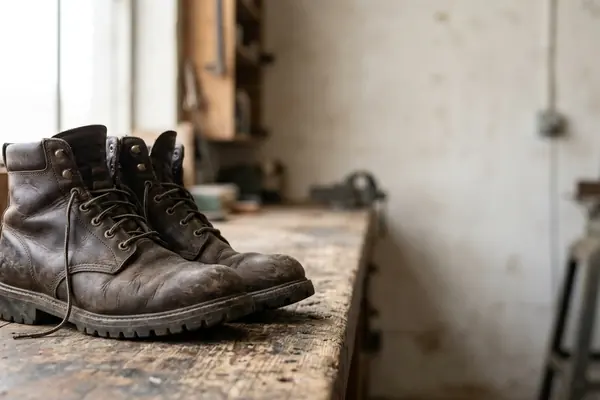
THE TOE CAP
200 joules, every time
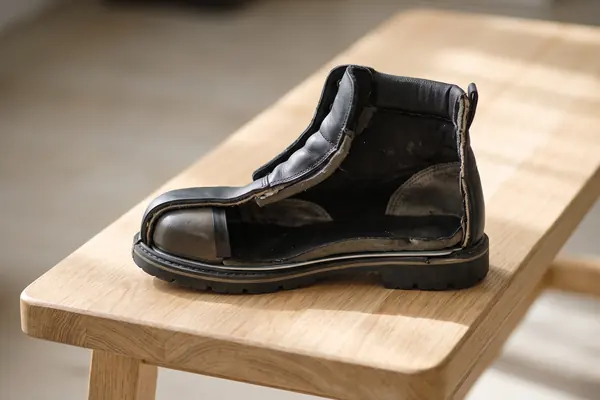
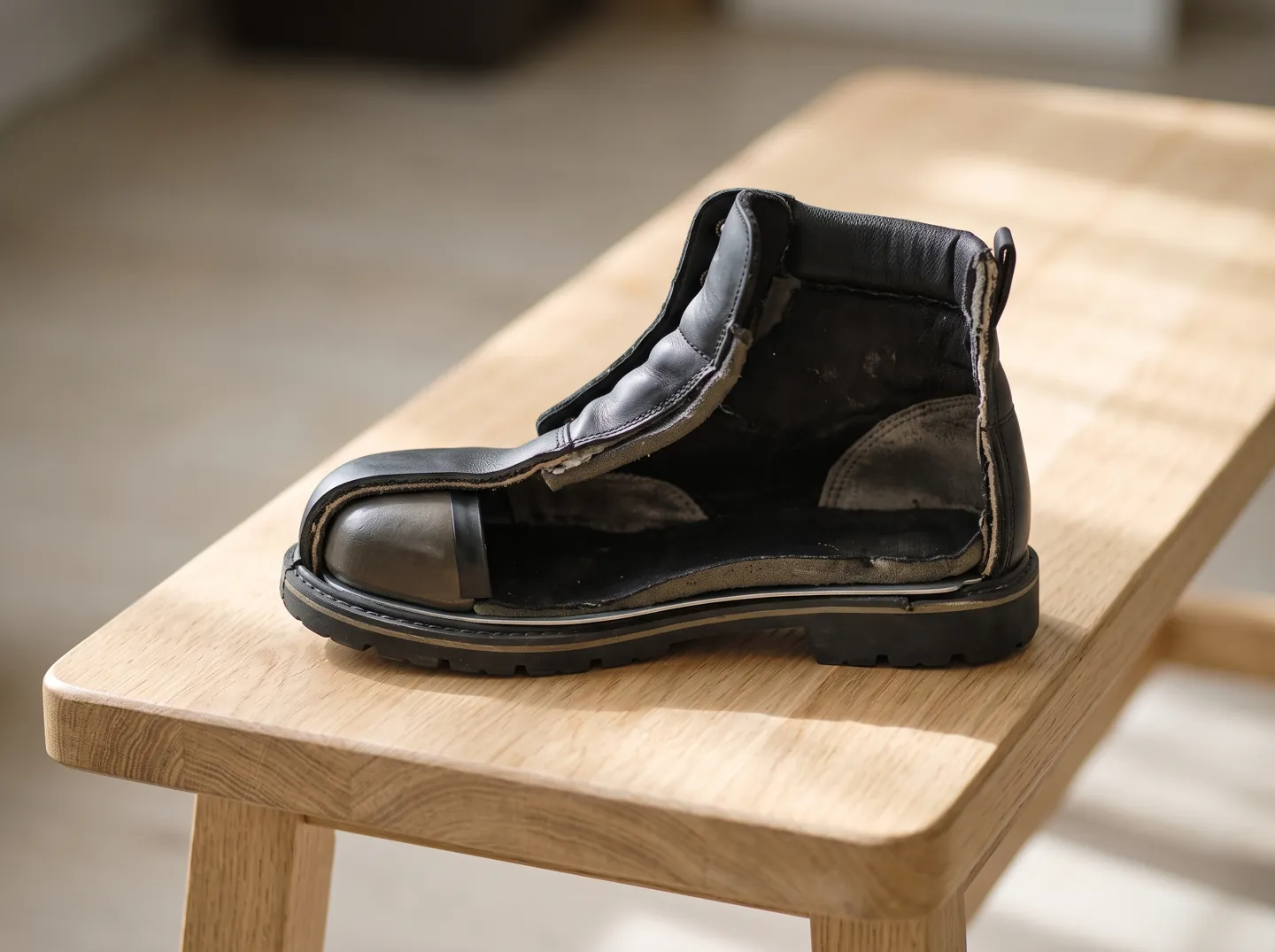
Safety footwear under EN ISO 20345 has a toe cap tested to an impact of 200 joules and a compression of 15,000 newtons. That is the starting point, marked SB.
Decode a class hardwearstudio
WHAT THE MARKINGS MEAN
A safety boot carries a short code inside.
Decode a marking
200 Jtoe cap test
Letters such as SB, S1, S3 and SR come from the safety footwear standard EN ISO 20345. Each one says what the boot was tested to withstand, from a dropped load on the toes to a nail underfoot or a wet, soapy floor.
At a glance
30%
Share of reported non-fatal injuries
Slips, trips or falls on the same level made up 30 percent of non-fatal injuries to employees reported under RIDDOR in Great Britain in 2024/25, the largest single kind. Being struck by a moving object made up 10 percent.
SLIPS AT WORK · HSE
70%
Workplace visits where slip-resistant footwear was merited
Ireland's Health and Safety Authority says that over three years, 70 percent of 5,871 of its workplace visits found that slip-resistant footwear was merited.
INSPECTIONS · HSA IRELAND
TWO NUMBERS WORTH KNOWING
One figure on how often people slip at work,
one on how often slip-resistant footwear is needed.
HSA also cites a 2009 HSE and HSL review that found no indication of slip resistance for 47 percent of footwear products, and warns that terms such as 'anti-slip' can mislead buyers.
DECODE A MARKING
Pick a class you have seen on a label to see what it adds. The bar shows how much tested protection the class carries on top of the toe cap.
Based on summaries of EN ISO 20345. This is general information, not safety or legal advice: a workplace risk assessment decides what footwear a job needs.
THE SHORT ANSWER
The base level is the toe cap.
Each step up adds a tested property.
THE TOE CAP
Safety footwear under EN ISO 20345 has a toe cap tested to an impact of 200 joules and a compression of 15,000 newtons. That is the starting point, marked SB.
Decode a classTHE CLASSES
S1 adds a closed heel, antistatic properties and heel energy absorption. S2 adds resistance to water through the upper. S3 adds a penetration-resistant sole and a cleated outsole.
Choosing a pairTHE GRIP
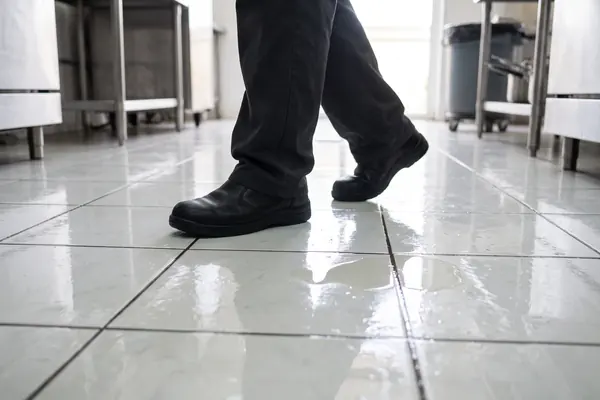
The 2022 edition of the standard replaced the old SRA, SRB and SRC marks with a single SR for extra slip resistance testing. Slips are the most common workplace injury in HSE figures.
See the numbers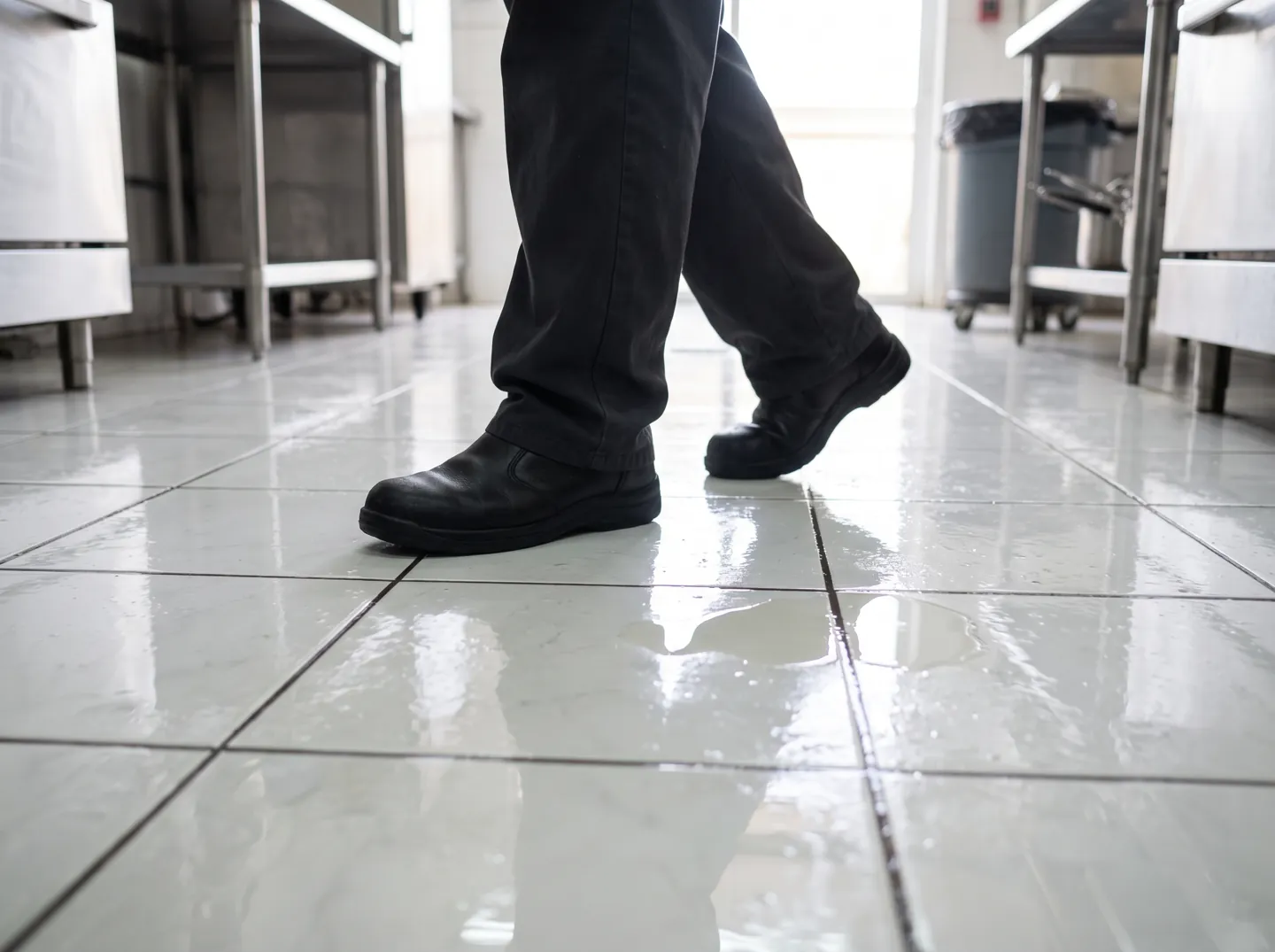
FOUR THINGS TO CHECK
A higher class is not always better: it adds weight and features you may not need. Start from what is actually on the floor and in the air where you work.
HSE says employers must provide PPE such as safety footwear free of charge when a risk assessment shows it is needed.
Check the label for EN ISO 20345 and a class such as S1 or S3. EN ISO 20347 occupational footwear does not need a protective toe cap.
On sites with nails or sharp debris, look for S3 or the P, PL or PS sole marks. In wet places, S2, S6 or S7 add water protection.
Look for a tested slip marking such as SR, not just words like 'anti-slip', and ask which floors the footwear suits.
THE 2022 EDITION
EN ISO 20345 was revised in 2022. The toe cap and the SB to S3 ladder stay, but the sole insert is now spelled out: P for steel tested with a 4.5 mm nail, PL for non-metal with a 4.5 mm nail and PS for non-metal with a 3 mm nail.
New classes S6 and S7 add a fully waterproof shoe, new optional marks include LG for ladder grip and SC for a scuff-resistant toe, and SR replaces SRA, SRB and SRC. Safety shoes launched after 30 March 2023 must be certified to the new edition.
Questions
Under EN ISO 20345, S3 footwear has the 200 joule toe cap, a closed heel, antistatic properties, heel energy absorption, a water-resistant upper, a penetration-resistant sole and a cleated outsole.
It protects against more hazards, but not every job has them. An S1 boot suits dry indoor work without sharp debris underfoot; the workplace risk assessment should decide.
The 2022 edition of EN ISO 20345 replaced them with a single SR mark for additional slip resistance testing. Older boots certified to the 2011 edition may still show the old marks.
Since 2022 the letter after S3 says what stops a nail: S3 uses a steel insert, S3L a non-metal insert tested with a 4.5 mm nail, and S3S a non-metal insert tested with a thinner 3 mm nail.
HSE guidance says employers must provide PPE, including safety footwear, free of charge if a risk assessment shows it is needed.
Sources
ABOUT THIS NAME
hardwearstudio.com is part of the DoodleSale portfolio. It isn't in an auction right now, but you can ask about leasing it.